
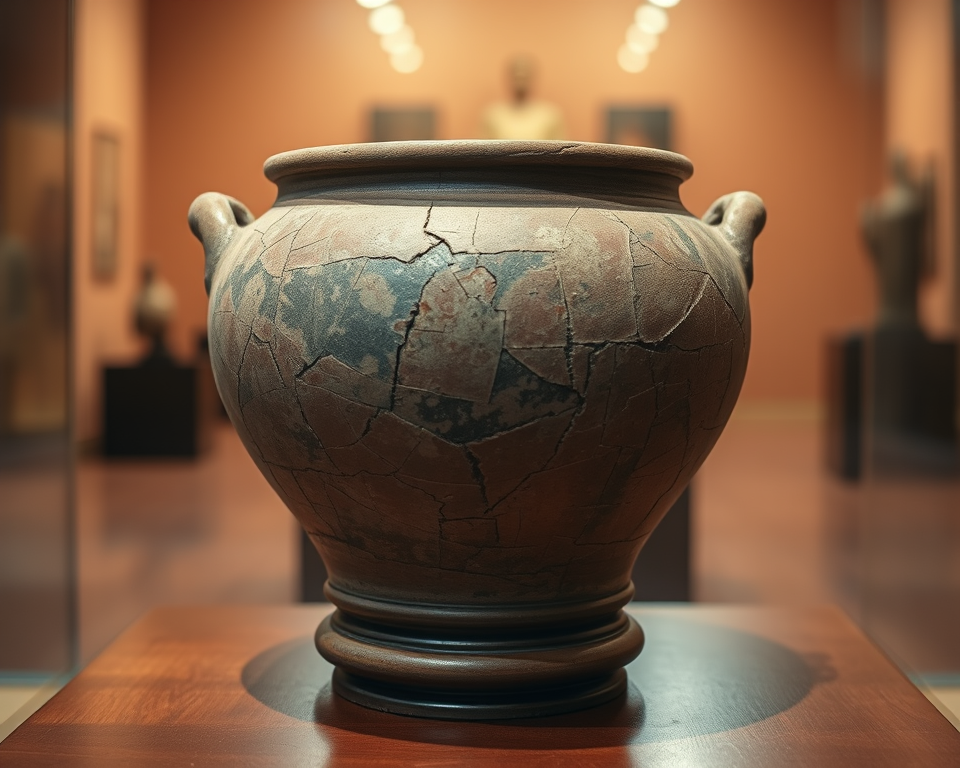
Picture this: you’re strolling through an exhibition at your local museum. Your gaze falls on an ancient pot, its colors slightly faded but still intriguing. You might wonder how something so simple could hold the key to understanding an entire culture. Here’s the kicker—pottery is far more than just clay molded into beautiful forms. It’s a primary source that tells stories, reveals daily lives, and even connects us to our ancestors. As someone fascinated by history, you’ll love digging into the vibrant world of pottery and its critical role in piecing together the jigsaw of human civilization.
Key Takeaways:
– Pottery provides invaluable insights into ancient cultures, serving as a tangible record of their daily lives and customs.
– Understanding the distinction between primary and secondary sources helps put the significance of pottery into perspective.
– Research methodologies involving pottery can lead to groundbreaking discoveries in various fields, including archaeology and anthropology.
– Real-world case studies showcase how pottery has shaped our understanding of specific cultures.
– By addressing common misconceptions, we can appreciate pottery’s impact on history and material culture.
Table of Contents
- 1 The Significance of Pottery as a Primary Source
- 2 Research Methodologies Involving Pottery
- 3 Examples of Pottery as a Primary Source
- 4 Addressing User Frustrations about Pottery as a Primary Source
- 5 Frequently Asked Questions
- 5.1 What are primary and secondary sources, and why are they important in historical research?
- 5.2 How can pottery help in understanding ancient cultures?
- 5.3 What specific archaeological methods are used to study pottery?
- 5.4 Can pottery findings impact our understanding of modern societies?
- 5.5 What role does pottery play in interdisciplinary studies?
- 5.6 Why is pottery considered an essential part of material culture studies?
- 5.7 How do historians verify the authenticity of pottery artifacts?
- 5.8 Are there resources available for educators interested in teaching about pottery’s historical significance?
- 5.9 What misconceptions do people have about the significance of pottery in history?
- 5.10 How can I get involved in pottery studies or archaeology?
The Significance of Pottery as a Primary Source
When we talk about primary sources, we’re referring to those direct materials from the past—think letters, diaries, or in our case, pottery. It’s the raw stuff historians dig into to understand what life was like without the filter of time. Pottery falls squarely in this category, offering not just aesthetic value but also cultural significance.
Imagine an archaeological dig site, perhaps in the ancient city of Pompeii. When an excavator discovers a terracotta pot, they’re not just unearthing a relic; they’re revealing the social status, diet, and even artistic trends of the time. This hands-on method of using pottery as a primary source can dramatically shape our understanding of ancient cultures.
Understanding Primary and Secondary Sources
Let’s break down what we mean by primary and secondary sources to clarify things a bit. If you think about it, primary sources are the first-hand accounts of history, the original materials that historians examine. On the flip side, secondary sources interpret or analyze those accounts. For example, scholarly articles discussing the significance of pottery in Ancient Egypt are secondary sources.
Here’s a simplified comparison in table format to make it crystal clear:
| Source Type | Definition | Examples |
|---|---|---|
| Primary Source | Original materials from the time being studied | Pottery, artifacts, diaries |
| Secondary Source | Interpretations or analyses of primary sources | Textbooks, articles, documentaries |
Being in the know about these differences is crucial for anyone wanting to dive deep into historical research; it helps us appreciate the value of pottery even more.
Historical Significance of Pottery
So, why is pottery historically significant? Well, for starters, it reflects the cultural heritage of a civilization. Picture everyday life in ancient Greece—scenes of laughter, trade, and social gatherings depicted on amphorae, which were used for storing oil and wine. These vessels aren’t merely decorative; they offer insights into the everyday norms, religious beliefs, and even quirks of that society. It’s like holding a time capsule in your hands!
Pottery isn’t just about aesthetics—it’s about human behavior and traditions. You see, by studying these artifacts, we can piece together the historical context of communities that existed thousands of years ago. From pottery styles to the materials used, every detail contributes to a grander narrative about how people lived, worked, and interacted.
“Pottery is the most significant cultural artifact, revealing the essence of human creativity and interaction.”
Plus, pottery often tells us about the materials available in each era. For instance, the transition from earthenware to stoneware signifies advances in technology and changing economic conditions.
Research Methodologies Involving Pottery
Now that we’ve established the significance of pottery, let’s get into how researchers approach it. The methodologies can be quite fascinating, blending history with science.
Think about the various archaeological methods available. Excavation techniques play a huge role, and it’s not all just digging holes—there’s a method to the madness. Pottery is collected and categorized by material, style, and even context. This careful analysis helps build a comprehensive picture of the society being studied.
Scientific analysis comes into play too, tapping into fields like chemical composition and radiography. For example, researchers can determine the age of pottery through techniques like thermoluminescence dating, which can analyze when the clay was last heated. This proves invaluable for constructing timelines of human activity in a region.
With interdisciplinary approaches, anthropologists, historians, and scientists collaborate to analyze pottery. This combination can yield rich insights, as each expert brings their own perspective to the table.
How Historians Use Pottery
Historians adore pottery as it feeds into cultural reconstruction. They sift through the pieces, interpreting what they find to stitch together narratives about civilizations long gone.
For instance, how do they achieve this? It involves detailed analyses of the pottery’s artistic motifs, shapes, and even the cooking methods implied by specific pieces. If you find a pot with scorch marks, it might indicate how ancient peoples cooked their meals.
In addition, pottery can provide clues on trade relationships. Imagine two different islands with distinct pottery styles—by examining the materials and styles, historians can infer the nature of interaction between these communities. It’s all about piecing together the puzzle to create a more engaging historical narrative.
Pottery’s Role in Various Fields
Don’t think pottery is only confined to history; its influence extends into multiple fields like anthropology and art history. It serves as a fascinating intersection for cultural studies, allowing researchers to explore everything from social systems to artistic expression.
Pottery often becomes a teaching tool in educational contexts as well. In art history classes, for example, it’s crucial for understanding the evolution of artistic techniques and cultural values. This adds layers of depth to what students experience and learn.
Researchers are increasingly blurring the lines between disciplines, combining methods from various fields to expand the impact pottery has across the board. Who knew that something so simple could resonate in so many contexts?
Examples of Pottery as a Primary Source
Now, let’s look at some real-life examples that highlight pottery as a pivotal primary source.
Case Studies Highlighting Pottery
One notable case involves the stunning pottery of the Moche civilization in Peru. Their beautifully decorated ceramics often featured intricate depictions of rituals, gods, and even the culture’s worldview. Through careful analysis, archaeologists have used these artifacts to reconstruct the Moche’s belief systems and social stratification.
Another example comes from Ancient China, where pottery tells us about their society’s organization. The famous Terracotta Warriors that accompany Qinshi Huangdi’s tomb aren’t all pottery, but they’ve led historians to discover a wealth of ceramic artifacts that inform us about the scale of workshops and labor practices during that era.
The Native American pottery of the Southwest also provides key insights into social structures and daily life, showcasing the intricate designs that reflect cultural narratives. Many tribes use traditional techniques to create pottery today, bridging past and present.
“If you want to understand a culture, just look at their pottery. It’s the voice of the people, echoing through time.”
Contemporary Relevance of Pottery
Let’s circle back to modern-day practices. Pottery has found its place in contemporary culture as well. There’s been a growing cultural revival of interest in handcrafted pottery, fueled by social media platforms where artisans showcase their work. It’s almost like a reminder that the roots of our human experiences still flourish.
Sustainable practices are also emerging, with modern potters prioritizing eco-friendly materials and techniques. Builders and artists alike are engaging their communities through pottery workshops, emphasizing the historical context while nurturing a respect for tradition and craftsmanship.
Furthermore, the educational use of pottery in schools is gaining traction. It’s a hands-on way for students to connect with history, learn about different cultures, and even explore the scientific aspects of materials. Talk about a win-win!
Addressing User Frustrations about Pottery as a Primary Source
It’s crucial to address some common misconceptions about pottery, especially for those venturing into this field for the first time.
Many people feel overwhelmed when tackling the topic of pottery as a primary source, particularly with all the jargon involved. The key here is to break down these complicated concepts and present them in an easily digestible manner.
Simplifying Technical Language
I know that struggling through overly academic articles can be frustrating! That’s why I encourage simplifying technical language when discussing pottery. Using relatable terms and examples can make it more engaging. If we talk about pottery techniques in terms of cooking styles or craft projects, it becomes approachable.
For example, instead of getting lost in specific terminology about firing temperatures, you might find it easier to think of pottery as like baking cookies—different recipes (techniques) produce different results!
Providing Clear Examples and Visual Aids
Incorporating photographs and diagrams can enrich understanding and engagement, too. Imagine seeing a diagram that outlines the different types of pottery styles from various regions. Having visuals helps the reader connect the dots between the text and real-life applications.
Here’s a list of pottery styles you might come across, alongside their respective regions:
| Style | Region | Characteristics |
|---|---|---|
| Greek Black-Figured Pottery | Greece | Figures painted in black against red clay |
| Pueblo Pottery | Southwestern USA | Intricate geometric designs, often hand-painted |
| Ming Dynasty Porcelain | China | Elegant, blue-and-white designs |
The Broader Implications of Pottery in Material Culture Studies
As we connect the dots, we see how pottery intersects with broader implications in material culture studies. It’s a realm where art, history, and sociology converge, allowing us to explore who we are as humans and how we relate to one another across time.
Exploring the Applications of Pottery
Let’s consider how pottery can be applied when teaching various subjects. For instance, in anthropology classes, it’s a fantastic way to study cultural exchange through trade pottery. Art history can be enhanced through in-depth analysis of styles; this comparative framework enriches students’ understanding of art as a reflection of societal conditions.
Moreover, pottery is often featured in workshops aimed at community education. These learning experiences can forge connections between past and present, bringing together different generations to share skills and stories.
Pottery and Its Impacts on Understanding Societies
The impacts of pottery on understanding societies are colossal! By examining how societies create and use pottery, we can glean insights into their behaviors, structures, and even aspirations.
When you think about it, pottery can also represent non-verbal communication. The unique designs signify different cultural identities, becoming symbols of tradition and belonging. This opens a dialogue about how pottery can affect collective memory within communities.
In essence, each pot tells a story—of where it was made, who crafted it, and how it was used. By engaging with these artifacts, we dive into the very fabric of human experience. And trust me, that experience is endlessly rich and interconnected.
Frequently Asked Questions
What are primary and secondary sources, and why are they important in historical research?
Primary sources are original documents or artifacts created at the time of the event being studied, while secondary sources interpret or analyze primary sources. Understanding these distinctions is vital as primary sources like pottery provide firsthand insights into past cultures and behaviors, enhancing historical research and interpretations.
How can pottery help in understanding ancient cultures?
Pottery serves as a window into the daily lives, traditions, and economies of ancient societies. By analyzing pottery styles, materials, and usage, researchers can infer information about trade relationships, cultural exchanges, and social structures prevalent in different historical contexts.
What specific archaeological methods are used to study pottery?
Pottery analysis often involves techniques such as typology, which categorizes pottery based on shape and decoration, and residue analysis, which examines chemical traces of contents. These methods help in reconstructing the usage and significance of the pottery in ancient cultures, revealing information about societal habits and practices.
Can pottery findings impact our understanding of modern societies?
Yes, contemporary pottery can reflect current cultural identities and practices. By studying modern ceramic traditions, researchers can draw parallels and learn how historical pottery influences contemporary artistic expressions and community practices, highlighting the continuum of cultural evolution.
What role does pottery play in interdisciplinary studies?
Pottery intersects with various fields like anthropology, archaeology, and art history. These cross-disciplinary insights can offer comprehensive perspectives on human behavior, cultural exchange, and material culture, enriching our understanding of how societies functioned and evolved over time.
Why is pottery considered an essential part of material culture studies?
Pottery is crucial in material culture studies because it embodies the intersection of art, utility, and identity. It provides tangible evidence of human creativity and adaptation, serving as a medium through which researchers can explore societal norms, values, and changes across different periods and regions.
How do historians verify the authenticity of pottery artifacts?
Historians employ several techniques to verify authenticity, including stylistic analysis, scientific dating methods like thermoluminescence or radiocarbon dating, and compositional analysis to identify materials. These processes help determine the artifact’s age and origin, confirming its historical significance.
Are there resources available for educators interested in teaching about pottery’s historical significance?
Many museums, archaeological organizations, and educational websites offer resources such as lesson plans, interactive exhibits, and workshops focusing on pottery’s role in history. Utilizing these tools can enhance the educational experience for students while making historical content relatable and engaging.
What misconceptions do people have about the significance of pottery in history?
Many people underestimate the value of pottery in historical research, seeing it merely as decorative items. In reality, pottery provides crucial insights into social structures, economic systems, and daily life of past civilizations, making it an invaluable resource for historians and archaeologists.
How can I get involved in pottery studies or archaeology?
You can start by enrolling in courses or workshops related to archaeology, anthropology, or ceramic studies offered by local universities or museums. Joining volunteer programs at archaeological digs or participating in community art projects can also provide hands-on experience and enhance your understanding of pottery’s role in history.
