
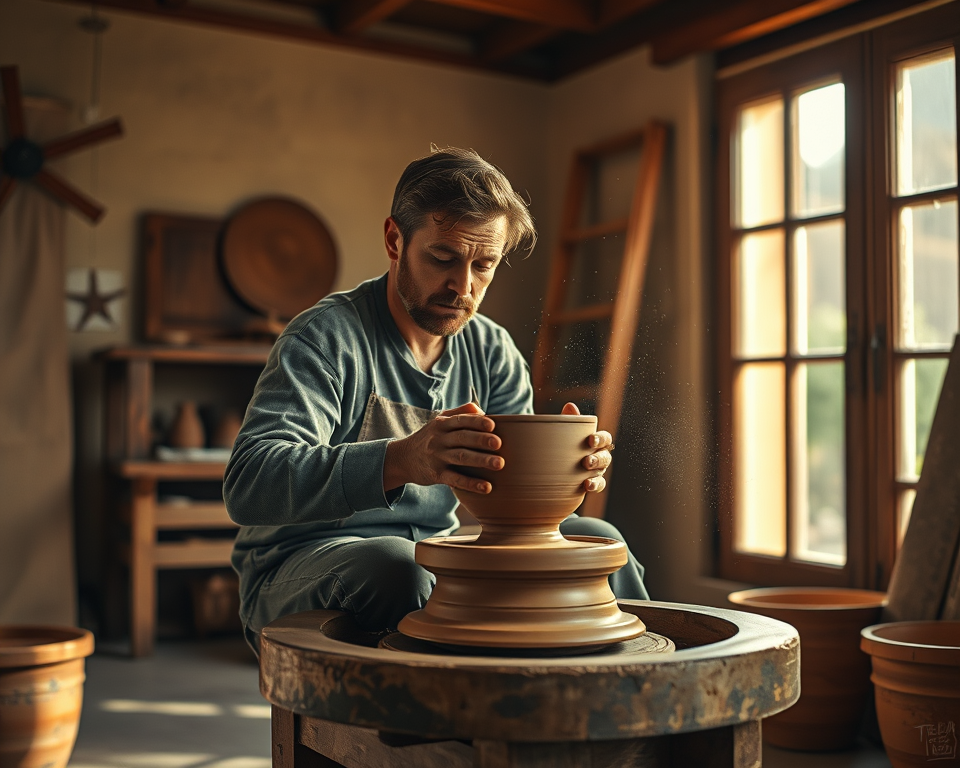
Hey there! So, you’re ready to jump into the world of pottery, huh? That’s awesome! Pottery is not just a craft; it’s a hands-on journey that allows for self-expression and, let’s be honest, it’s a great way to unwind. Trust me; you’ll love bringing your ideas to life with clay. But before ya start slinging mud, you’ll want to know what tools and materials you’ll need for your adventure. Let’s get this show on the road!
Table of Contents
- 1 Key Takeaways
- 2 Essential Pottery Tools
- 3 Essential Pottery Materials
- 4 Beginner-Friendly Techniques
- 5 Community and Resources
- 6 Frequently Asked Questions
- 6.1 What are the differences between earthenware, stoneware, and porcelain clay?
- 6.2 How do I choose the right glaze for my pottery?
- 6.3 What should I keep in mind when selecting a kiln for beginners?
- 6.4 How can I prevent common beginner pottery mistakes?
- 6.5 Are there specific techniques to improve wheel-throwing skills for beginners?
- 6.6 How do I properly clean and maintain pottery tools?
- 6.7 Where can I find local pottery classes?
- 6.8 What are some beginner-friendly pottery projects to try?
- 6.9 What safety precautions should beginners follow while working with pottery materials?
- 6.10 How can I engage with the pottery community online?
Key Takeaways
- You don’t need to break the bank to get started; a basic toolkit can set you up for success.
- Two main paths: hand-building and wheel-throwing. Choose your tools accordingly!
- Community and resources are your secret weapons; local classes and online groups will keep you motivated and inspired!
Essential Pottery Tools
When I started, the sheer amount of tools available made my head spin! But let me tell you, you don’t need every fancy gadget out there—just a few key pieces to make your life easier. Here’s a rundown of what’s essential in your pottery toolkit.
Hand Tools
Alright, first off, let’s talk about hand tools. These babies are a must for shaping, sculpting, and giving your pieces the TLC they deserve. Here’s what you should snag:
Pottery Rib: This simple tool can help you smooth out your pieces and create various forms. The Kemper Pottery Rib is a favorite among newbies for just around $8.95. Smooth it, shape it, make it yours!
Wire Cutter: No kidding, you’ll use this one a lot! It’s perfect for cutting your clay off the wheel or slicing through big blocks of clay. Check out the Sculpture Wire Tool priced at about $5.99 for a reliable choice.
Handbuilding Kits: If you’re going the hand-building route, a basic kit like the Amaco Handbuilding Tool Set (around $12.99) contains all you need—pinch pot tool, modeling tool, and everything else you might need.
“Good tools are the backbone of your creativity. Don’t skimp on quality!”
Wheel-Throwing Tools
If you’re leaning more towards the magical realm of wheel-throwing (and who wouldn’t be?), you’ll need a few specialized tools to get you started. Here are some must-haves:
Pottery Wheel: The Blick Studio Pottery Wheel is perfect for beginners at $250. It’s compact and easy to use. Plus, it’s got a 1/2 horsepower motor, which means it can handle the tough stuff!
Turning Tools: For throwing, you absolutely need a Wooden Rib and a Throwing Stick. Both will run you around $15 together but are invaluable in shaping your pots.
Sponge: Don’t underestimate the power of the sponge! Keeping your pots moist is crucial while you’re working on them. Just grab a basic sponge for about $1.00.
Now, if you’re feeling a bit adventurous, check out starter sets like the Sax Pottery Wheel Set, which bundles various tools together for just $299.
Safety Gear
Alright, let’s get serious for a moment. Safety first, folks! Pottery can be messy and dusty, so it’s crucial to gear up.
Dust Mask: Anytime you’re sanding or dealing with dry clay, make sure to wear a good dust mask. Check out the 3M 9511 Respirator for around $19.99.
Gloves: Keep your hands clean! The AMZ Medical Nitrile Gloves are perfect for protecting your hands during glazing, costing about $9.99 for a box of 100.
Apron: Don’t ruin your favorite shirt! Grab a sturdy pottery apron from places like Michaels for around $15.
Essential Pottery Materials
Now that you have your tools sorted, let’s talk materials, shall we? Picking the right supplies is essential to ensure your pottery pieces come out as you imagined.
Types of Clay
Not all clay is made equal, my friend! Depending on what you want to create, the type of clay you choose matters. For beginners, here are a few types I highly recommend:
Earthenware Clay: This is a classic for beginners, super easy to work with, and inexpensive! Duncan’s Easy-to-Use Earthenware Clay costs about $11 per 25 lbs.
Stoneware Clay: If you want something more durable for functional pottery, go for a stoneware clay like Laguna Clay’s Stoneware 10. It’s around $14.99 for 25 lbs and holds up beautifully when fired.
Porcelain: A bit more challenging but oh-so-tempting! If you’re up for it, give Amaco’s White Porcelain a shot—it’s about $15 for 25 lbs.
“Choosing the right clay is like picking the right partner. It makes all the difference!”
Glazes and Finishes
Once your pieces are shaped, they need some flair! Here’s a rundown of beginner-friendly glazes and finishes:
Underglazes: Mayco’s Colors UnderGlaze is fabulous for adding detailed designs before a final glaze. A set of colors can start around $28.
Clear Glaze: For a shiny finish, opt for Cone 04 Clear Glaze—around $20 for a gallon will give you enough to last for ages.
Non-toxic Glazes: Brands like Spectrum offer a range of non-toxic glazes that are perfect for functional pieces. A single pint runs about $15.
Kilns and Firing Methods
Having a kiln is kinda crucial if you’re serious about pottery, but don’t fret—I’ll give you the lowdown. If you’re starting, check this out:
Electric Kiln: The Paragon Kiln is a great option for beginners at around $1,200. It’s user-friendly and perfect for any stoneware or earthenware pieces you create.
Firing Methods: If you’re looking for tutorials, the Ceramics Monthly has amazing resources for beginners to understand bisque and glaze firing.
Here’s a quick comparison table to help you choose the right clay and tools for your needs:
| Clay Type | Best For | Price (Per 25 lbs) |
|---|---|---|
| Earthenware | Hand-building | $11 |
| Stoneware | Functional pottery | $14.99 |
| Porcelain | Detailed designs | $15 |
| Electric Kiln | Firing pottery | $1,200 |
Beginner-Friendly Techniques
You’ve got your tools and materials—now it’s time to get your hands dirty! Here’s the scoop on some beginner-friendly techniques to help you make your pottery dreams come true.
Hand-Building Techniques
Hand-building is one of the easiest ways to start your pottery journey. You can use any of the basic hand tools we discussed earlier to form your creations. Here are three fantastic techniques perfect for newbies:
Pinch Pots: It’s simple! Grab a ball of clay, press your thumb into the clay, and pinch it around to create a small bowl. You can find countless tutorials online.
Coiling: Using long snakes of clay, stack and shape them to form pots or bowls. This is where you let your creativity shine!
Slab Building: Roll out flat pieces of clay and assemble them into shapes and forms. It’s like building with soft bricks, and you can create anything from trays to boxes!
Wheel-Throwing Techniques
If you’re ready to tackle using a wheel, here are some basic techniques to keep in mind:
Centering: This is the most challenging but crucial! Learn to center your clay on the wheel. If you struggle, check out YouTube; there are tons of helpful videos!
Creating a Cylinder: Once you center your clay, push down and pull up to shape your piece into a cylinder. Practice makes perfect, my friend!
Trimming: After you’ve made your piece and it’s leather-hard, it’s time to trim your pot to get that smooth edge and even base.
Troubleshooting Common Mistakes
Every beginner makes mistakes—we’ve all been there! Here are a few common hiccups and how to fix them:
Cracks: Always keep your clay moist while working. If you notice cracks forming, gently spritz with water and cover it until you’re ready to work again.
Uneven Pieces: If your pieces aren’t coming out even, practice centering more. Remember that patience is key!
Glaze Issues: If your glaze runs or doesn’t stick, check your application technique. Always apply glazes to bisque-fired pieces.
“Mistakes aren’t failures; they’re learning opportunities. Embrace them!”
Community and Resources
The pottery community is truly the heart of this craft. Engaging with fellow potters can fuel your passion and even boost your skills. Here’s how to tap into this vibrant world.
Local Workshops and Classes
Check out your local art studios! Many places offer workshops specifically designed for beginners. Here are some places to look into:
Art Supply Stores: Often, they list classes or can guide you to local studios.
Community Centers: These places frequently host pottery classes—perfect for learning in a group!
Pottery Studios: Sign up for beginner classes at a nearby pottery studio. Pricing can vary but expect around $150 for a basic course.
Online Resources
Can’t make it to a class? No problem! The internet is brimming with fantastic resources:
YouTube Channels: Channels like “The Pottery Subreddit” have tons of tutorials for beginners.
Pottery Blogs: Blogs are a treasure trove of information! Check out “The Ceramic School,” which has free resources and guides.
Social Media Groups: Join Facebook groups or follow pottery accounts on Instagram for daily inspiration and tips from fellow potters!
Sharing and Engagement
Get involved online or in your local community! Whether it’s by sharing your creation process on social media, participating in local artist showcases, or simply exchanging tips with fellow potters, the connections you form will elevate your learning experience.
Find platforms that allow for sharing your work, like Pinterest or Instagram, where you can post pictures of your pottery and get feedback from others. I’m telling you, those affirmations from fellow potters will be the motivational fuel you need!
There you have it, my pottery friend! With the right tools, materials, and support, you’re all set to embark on a delightful creative journey. Go on, have fun, get messy, and remember: it’s about the experience, not just the outcome!
Frequently Asked Questions
What are the differences between earthenware, stoneware, and porcelain clay?
Earthenware clay is low-fire and porous, often used for decorative pots. Stoneware is medium to high-fire and is denser, making it suitable for functional items. Porcelain, known for its fine texture and strength, is high-fire and often used for detailed work. Understanding these differences helps beginners choose the right clay for their projects.
How do I choose the right glaze for my pottery?
Choosing the right glaze involves considering the desired finish (matte, glossy, etc.), the type of clay used, and the firing temperature. Test small samples with different glazes to see how they interact. Additionally, consult glaze guides to understand their behaviors and compatibility with various clays.
What should I keep in mind when selecting a kiln for beginners?
When selecting a kiln, consider the size, firing type (electric vs. gas), and temperature range. As a beginner, an electric kiln is often easier to use and maintain. Look for models that offer programmable controls for ease of firing, and make sure it fits your workspace and budget.
How can I prevent common beginner pottery mistakes?
To prevent common mistakes, take your time during each phase—preparing clay, shaping, and firing. Practice consistency in thickness, avoid air bubbles, and ensure proper drying before firing. Learning basic troubleshooting techniques, like how to adjust moisture levels, can also help in avoiding issues.
Are there specific techniques to improve wheel-throwing skills for beginners?
To improve wheel-throwing skills, focus on centering the clay, which is fundamental to successful throwing. Practice maintaining consistent pressure and speed while pulling the walls. Watching instructional videos can also help visualize techniques, and taking notes during classes will reinforce your learning.
How do I properly clean and maintain pottery tools?
To maintain pottery tools, clean them with water and a brush after each use, removing all clay residues. For wooden tools, occasionally apply mineral oil to keep them from drying out. Regular inspections for damage will help ensure they remain in good working condition.
Where can I find local pottery classes?
You can find local pottery classes by checking community centers, art schools, and pottery studios. Websites like Meetup, Facebook events, and local bulletin boards often list upcoming workshops. Contacting pottery co-ops or guilds in your area is also a great way to discover classes for beginners.
What are some beginner-friendly pottery projects to try?
Beginner-friendly pottery projects include making pinch pots, coiled bowls, and simple slab-built items. These projects allow for experimentation with hand-building techniques and are great for practicing form. As you gain confidence, you can explore more complex projects, like making mugs or vases.
What safety precautions should beginners follow while working with pottery materials?
Beginners should wear a dust mask when sanding clay to avoid inhaling particles, as well as gloves when handling glazes and other chemicals. Ensure your workspace is well-ventilated and keep all materials organized to prevent accidents. Familiarize yourself with kiln safety protocols before firing projects.
How can I engage with the pottery community online?
You can engage with the pottery community online by joining social media groups dedicated to pottery, participating in forums like Pottery Heads, or subscribing to pottery blogs and YouTube channels. Engaging with these platforms allows you to share your work, ask questions, and learn from experienced potters.
