
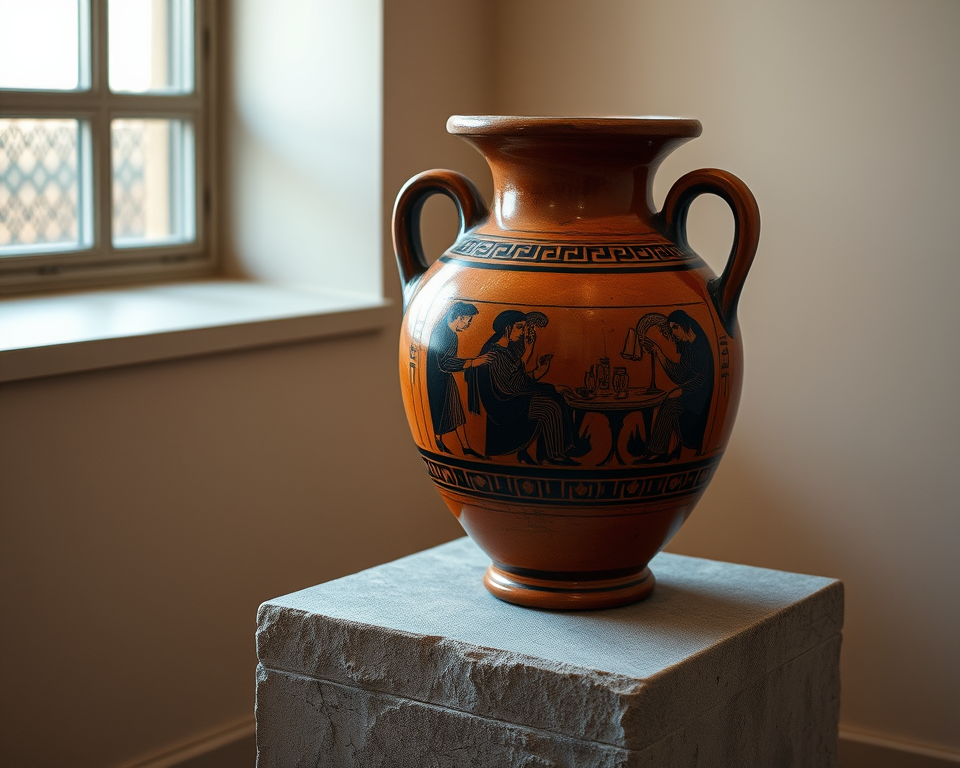
When I stumbled upon Greek pottery for the first time, it felt like finding a hidden treasure—each piece vibrantly whispering stories of ancient lives, beliefs, and art. If you’re diving into this fascinating world, trust me, you’re in for a rich and colorful journey! Greek pottery isn’t just clay shaped and painted; it’s a window into the culture, ceremonies, and daily lives of our ancient ancestors.
Just imagine holding a beautifully crafted amphora, its curved shape designed not just for looks but with purpose—to store and transport olive oil or wine. As you brush your fingers across its surface, you can almost hear the echoes of gatherings where these very vessels were used. Curious yet? Let’s dive right into the intriguing aspects of Greek pottery that we simply can’t ignore.
Table of Contents
- 1 Key Takeaways
- 2 History of Greek Pottery
- 3 Types of Greek Pottery
- 4 Significance of Greek Pottery in Culture
- 5 Techniques and Craftsmanship
- 6 Archaeological Insights
- 7 Frequently Asked Questions
- 7.1 What are some key differences between black-figure and red-figure pottery?
- 7.2 How did pottery evolve during the various historical periods in Greece?
- 7.3 What were the primary materials used in ancient Greek pottery?
- 7.4 How significant was pottery in ancient Greek daily life beyond art?
- 7.5 What are some lesser-known styles of Greek pottery that I should be aware of?
- 7.6 How did mythology influence the themes found in Greek pottery?
- 7.7 What techniques did ancient Greeks use in pottery glazing and decoration?
- 7.8 How is ancient Greek pottery preserved and studied in modern times?
- 7.9 Why is Greek pottery considered a vital archaeological resource?
- 7.10 What can I do if I want to learn more about ancient Greek pottery?
Key Takeaways
- Greek pottery boasts a variety of styles, each reflecting the artistry of its time and the culture it served.
- From black-figure to red-figure techniques, the choice of style often dictated the narrative and purpose of the pottery.
- Pottery served not just as decoration but as a function in daily life, myth-making, and societal rituals.
- Ancient craftsmanship techniques illustrate the technical skills and artistry that have influenced modern ceramic practices.
- Archaeological discoveries of pottery are crucial in unraveling the past, offering insights into history, culture, and artistry.
History of Greek Pottery
The tale of Greek pottery begins in the Neolithic period, when our ancestors were just figuring out how to mold clay into usable forms. Fast forward to the Geometric and Archaic periods, where pottery wasn’t just about utility but also about cultural expression. During these times, the Greeks developed incredible pottery techniques that showcased their skill and artistry.
Early Pottery Techniques
Back in the Neolithic era, pottery was basically a form of craftsmanship that involved a lot of trial and error. Their techniques were pretty primitive—think hand-shaped pots that were often air-dried rather than fired. Primitive pottery methods laid the groundwork for more advanced techniques that would come later. It’s fascinating to see how they transitioned from simple handmade creations to intricate affairs.
By the time we hit the Middle Bronze Age, things really started heating up—literally! The innovation of firing pottery allowed for stronger, more durable pieces. This advancement not only made pottery functional but also unlocked the door for beautiful artistic expressions, laying the foundation for the wealth of styles we admire today.
“Pottery in ancient Greece represents not just functional artifacts but an evolving canvas for artistic expression.”
The Geometric and Archaic Periods
As we step into the Geometric period, we see the emergence of distinctive pottery styles—notably the Geometric style itself, characterized by repetitive patterns and simple shapes. Vases from this period often featured lines, zigzags, and triangles, reflecting a growing appreciation for design and craftsmanship.
Transitioning into the Archaic period, we notice a significant shift: the introduction of more complex figures and motifs. These vases displayed scenes from mythology, athletic competition, and everyday life. The Archaic period’s pottery styles are visually striking and tell us a lot about what mattered to the Greeks—victory, gods, and human experience.
Types of Greek Pottery
With a variety of shapes and purposes, Greek pottery is hard to overlook. Let’s take a closer look at some of the most notable pottery types that adorned tables and altars across ancient Greece.
Black-Figure vs. Red-Figure Pottery
Two of the most fascinating techniques in Greek pottery are the black-figure and red-figure styles. In black-figure pottery, artists painted figures in a black slip over the natural red clay, then carved details into the surface. This style gained immense popularity, particularly between the 7th and 5th centuries BC.
Red-figure pottery flipped this technique on its head. Instead of painting the figures black, artisans left them the natural red color of the clay, painting the background black instead. This innovation allowed for greater detail and a more dynamic portrayal of scenes, making figures appear more three-dimensional. The artistry involved in these techniques offers a glimpse into the incredible skill of ancient potters.
Quick Comparison Table: Black-Figure vs. Red-Figure Pottery
| Feature | Black-Figure Pottery | Red-Figure Pottery |
|---|---|---|
| Coloration | Black figures on a red background | Red figures on a black background |
| Detailing Technique | Carving details into black slip | Painting details onto red clay |
| Popularity Period | 7th to 5th century BC | 6th century onward |
| Visual Style | Stiffer, more traditional figures | More dynamic and fluid representations |
| Notable Artists | Exekias, The Amasis Painter | Euthymides, The Paris Painter |
Other Notable Styles
Beyond these two well-known styles, there’s a plethora of fascinating pottery forms worth mentioning. For instance, there’s the white-ground pottery that flourished in the late Classical period. It served as a canvas for exquisite narrative art, featuring scenes from mythology painted in vivid colors.
Then we have Proto-Corinthian pottery, characterized by the intricate detailing of animals and floral motifs. This style came to prominence in the 7th century BC and offers a glimpse into the aesthetic tastes of the time.
Significance of Greek Pottery in Culture
Pottery held a pivotal role in ancient Greek society, far beyond mere utility. It was integral to daily life, rituals, and art, each piece often offering rich narrative significance.
Pottery in Daily Life
Imagine a bustling agora, with earthenware pots and vases everywhere! Everyday Greek pottery catered to practical needs like storage, cooking, and serving. Besides being functional, these pots often bore decorations reflecting social status or personal taste.
Common household ceramics included kraters for mixing wine, amphorae for storing oil, and kylixes that made toasting at banquets a joyous affair. Every piece reveals something about the day-to-day lives of the Greeks, showing us how pottery shaped their social fabric.
“Every piece of pottery tells a story of the people who crafted and used it, bridging the gap between ancient and modern life.”
Pottery and Mythology
Mythology and pottery share a deep, intertwined relationship. Many vases depicted scenes from famous myths, conveying stories of gods, heroes, and legendary events. Picture a beautifully painted vase illustrating the trials of Hercules—these narrative scenes not only served as decoration but as cultural education, preserving the stories that defined Greek identity.
This storytelling through pottery emphasizes the importance of narrative in ancient Greek culture, showcasing how art can communicate complex ideas and shared values.
Techniques and Craftsmanship
The mastery behind Greek pottery techniques is nothing short of spectacular. I’ve always been in awe of the craftsmanship that ancient potters demonstrated, balancing function and art with such grace.
Tools and Materials
Creating pottery is much more than just molding clay; it’s an art form that involves specific tools and materials. Ancient potters primarily used hand tools, potter’s wheels, and kilns, some of which resemble the ones we still use today. The quality of clay used was paramount; finer clay led to better, more durable results.
Different types of clay held unique properties, affecting the final appearance and function. This knowledge was honed over generations, with artisans developing their techniques and sharing them through apprenticeships.
Significance of Glazing and Decoration
Glazing played a monumental role in the aesthetics and function of Greek pottery. Early techniques included simple applications that were primarily utilitarian, but as time rolled on, potters developed elaborate glazing techniques that provided both visual allure and protection against wear.
Decorative aspects varied significantly between styles. For example, black-figure pottery often had a glossy finish, which not only accentuated the starkness of the black against red, but also added to the durability of the pieces. In contrast, red-figure pottery showcased much more elaborate color application, allowing for detailed artistry that made these pieces coveted treasures.
Archaeological Insights
Archaeological findings have continually enriched our understanding of Greek pottery. Every dig, every discovery of significant pottery artifacts provides insights into ancient life that textbooks can only attempt to convey.
Influence on Modern Ceramics
The legacy of Greek pottery isn’t just locked in museums; it’s very much alive in contemporary ceramics. Many modern ceramic artists draw heavily from Greek techniques, styles, and themes, integrating them into their unique creations.
For instance, artists such as Julie Wiggins draw inspiration from ancient forms while innovating new ways to express color and form. You can even find pottery classes today that teach the lost art of slip trailing, a technique perfected by ancient Greeks.
Preservation and Study of Pottery
With thousands of years of history, the study and preservation of ancient pottery is crucial. Experts utilize advanced techniques to analyze these artifacts, such as scanning electron microscopy and GPS imaging to locate the exact origins of the clay and decorations.
Institutions like the Museum of Fine Arts in Boston dedicated galleries to Greek pottery, emphasizing both their artistic merit and historical importance. Public interest continues to grow as these institutions shed light on the craftsmanship of ancient artisans.
In the end, while we may not be able to reach back into the past, the beauty and significance of Greek pottery stand as a testament to how art can endure across time, bridging the divide between our worlds in its timeless elegance.
Frequently Asked Questions
What are some key differences between black-figure and red-figure pottery?
The primary distinction between black-figure and red-figure pottery lies in the color of the figures and the painting technique. In black-figure pottery, figures are painted in a black slip against the natural red clay background, while in red-figure pottery, the figures are left in the red clay color, with details added using a fine brush, allowing for greater detail and anatomical accuracy.
How did pottery evolve during the various historical periods in Greece?
Pottery evolved significantly from the Neolithic period through the Geometric and Archaic periods. Early techniques were simple and utilitarian, gradually incorporating artistic elements and more sophisticated styles. Each period introduced distinct shapes, forms, and decorative techniques, reflecting changes in society, trade, and cultural influences.
What were the primary materials used in ancient Greek pottery?
Ancient Greek potters primarily used local clay, which varied in color and texture depending on the region. Red and black slips were applied for decoration. Other materials included water for mixing clay and tools like brushes, sponges, and scrapers for finishing the pottery. The quality of clay greatly influenced the durability and appearance of the final product.
How significant was pottery in ancient Greek daily life beyond art?
Pottery played a crucial role in everyday life in ancient Greece, serving practical functions such as storage, cooking, and serving food and beverages. Its importance extended to rituals, where specific pottery was used in religious ceremonies, highlighting the social and cultural significance of ceramics beyond mere aesthetics.
What are some lesser-known styles of Greek pottery that I should be aware of?
Besides the well-known black-figure and red-figure styles, there are other notable forms such as white-ground pottery, which featured a lighter background for painting, and Proto-Corinthian pottery, known for its intricate decoration and floral designs. These styles provide insight into regional variations and shifts in artistic preferences.
How did mythology influence the themes found in Greek pottery?
Greek pottery often depicted mythological scenes and figures, serving as a medium for storytelling. Vases illustrated narratives involving gods, heroes, and significant myths, resulting in rich commentary on cultural beliefs while also showcasing the craftsmanship of the artisans who created them.
What techniques did ancient Greeks use in pottery glazing and decoration?
Ancient Greek potters utilized techniques such as slip decoration and underglaze painting to enhance their pottery designs. They experimented with firing methods to achieve different finishes, including lustrous effects. Techniques evolved over time, leading to innovations in how glazes interacted with clay during the firing process.
How is ancient Greek pottery preserved and studied in modern times?
Modern archaeology employs various techniques for the preservation and study of Greek pottery, including chemical analysis for material composition and advanced imaging technologies to uncover details beneath surface layers. Conservation efforts focus on stabilizing fragile artifacts to ensure they remain intact for future study and display in museums.
Why is Greek pottery considered a vital archaeological resource?
Greek pottery is crucial for archaeology because it provides insights into ancient Greek society, trade, and cultural practices. Artifacts can reveal the social status of individuals, daily life activities, and the evolution of artistic styles. Pottery also aids in dating archaeological layers, helping reconstruct historical timelines.
What can I do if I want to learn more about ancient Greek pottery?
To dive deeper into ancient Greek pottery, consider visiting museums with dedicated ceramic exhibits, reading scholarly books, and exploring online courses or lectures. Engaging with local workshops in pottery-making can provide hands-on experience and a greater appreciation for the techniques employed by ancient artisans.
