
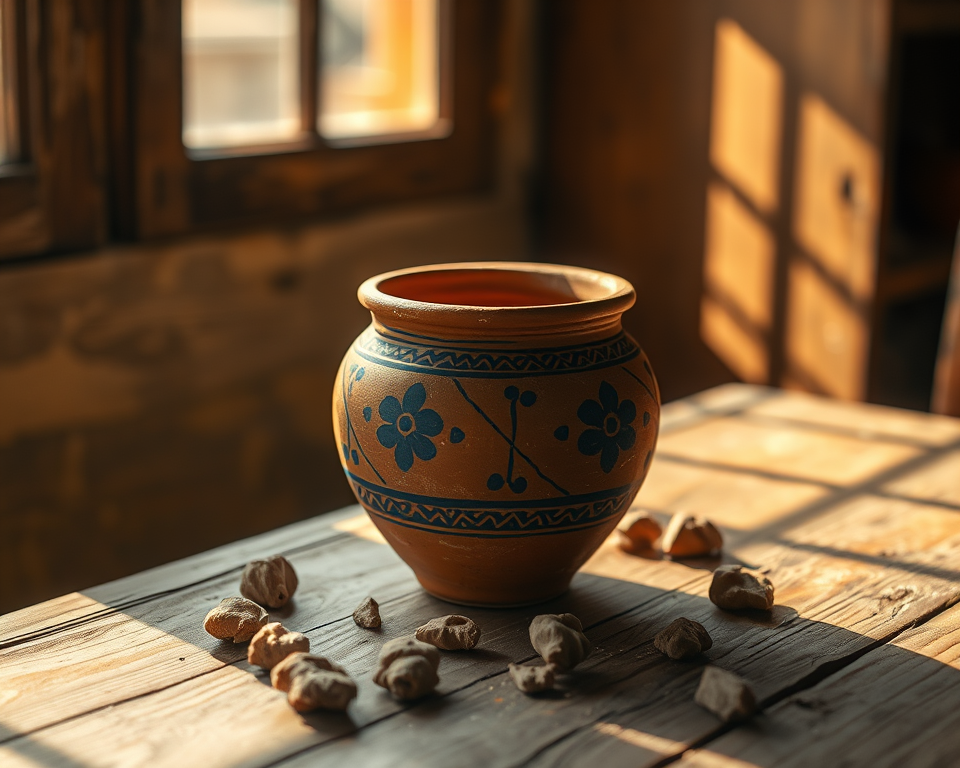
Pottery is one of those art forms that feels as old as time itself, right? In every corner of the globe, we can find beautiful ceramics adorning homes and museums alike, and each piece tells a story that dates back to ancient civilizations. If you’re like me, your curiosity about this art form probably connects deeply to the cultures and histories that shaped our world. So, let’s roll up our sleeves and take a closer look at the riveting world of pottery!
Table of Contents
- 1 Key Takeaways
- 2 The Evolution of Pottery: A Historical Overview
- 3 The Role of Pottery in Ancient Civilizations
- 4 Pottery as a Reflection of Society
- 5 Materials and Techniques Used in Pottery
- 6 Pottery in Archaeological Contexts
- 7 The Future of Pottery: Trends and Innovations
- 8 Frequently Asked Questions
- 8.1 What were some of the earliest known civilizations to practice pottery?
- 8.2 How did pottery techniques evolve over time?
- 8.3 What materials were traditionally used in ancient pottery?
- 8.4 How does pottery reflect cultural identity?
- 8.5 What are the environmental impacts of pottery production?
- 8.6 What role does pottery play in modern art movements?
- 8.7 How can traditional pottery techniques be preserved today?
- 8.8 What are some notable archaeological discoveries of pottery?
- 8.9 Why are pottery artifacts important in anthropology and history studies?
Key Takeaways
- Pottery serves as a crucial indicator of technological and social advancements throughout history.
- From utility to artistic expression, the significance of pottery spans cultures and centuries.
- Various materials and techniques in pottery reflect local resources and societal complexities.
- Modern pottery blends traditional techniques with contemporary innovations, ensuring cultural preservation.
- Excavations and archaeological studies reveal invaluable insights about ancient societies through pottery findings.
The Evolution of Pottery: A Historical Overview
You know, when we talk about pottery, it’s like flipping through a time capsule that spans thousands of years. The origins can be traced back to the Paleolithic period, where our ancestors were crafting rudimentary clay vessels to store food. Fast forward a few millennia, and we find ourselves in the Neolithic era—think of it as the “pottery boom” of early civilizations.
In this period, people were making some seriously cool stuff, like the Venus of Dolní Věstonice, the world’s oldest known ceramic figurine dating back to 29,000 years ago. Early potters used natural materials from their environments, shaping them into functional items, which laid the groundwork for future advancements in ceramics.
Early Pottery Practices
Let’s chat about the first pottery examples—those early pots and dishes were not only impressive because they were the first but also because they showcased the beginning of human creativity. In places like China and Japan, people began experimenting with clay, leading to the creation of distinctive and regional techniques.
I mean, imagine living in the Neolithic age and feeling the warmth of the sun beating down on you while you crafted your first bowl. To me, that’s a wild thought, and honestly, I can almost feel the excitement in the air. Significant archaeological finds from places like Jomon Japan reveal intricately designed pottery that is testimony to the artistry and cultural significance of its people.
“Pottery should not just be viewed as a vessel, but as a reflection of the culture that shaped it.”
The Role of Pottery in Ancient Civilizations
As we shift our focus to ancient civilizations, pottery’s role expands significantly. In cultures like Mesopotamia and Egypt, pottery wasn’t just practical; it was a way to express cultural identity. This was the golden age of artistic styles, where you’d see beautifully decorated vases and ceremonial items.
Imagine walking through a bustling market in ancient Athens, surrounded by the iconic black-figure and red-figure pottery. Greek vases, often used in social functions, were adorned with detailed depictions of everyday life and mythology. They weren’t just containers—they were storytelling devices, opening windows into the past.
Cultural Significance of Pottery Across Civilizations
Around the world, pottery has been used in rituals and ceremonies that hold significant cultural weight. For instance, the Mesoamerican cultures had incredibly intricate pottery that served various purposes—from everyday use to important religious rituals. They’d even incorporate symbolic meanings in their designs. This cultural layering helps us understand how pottery helps shape community practices and cultural identity.
When I look at a piece of pottery, I’m not just seeing clay and paint; I’m seeing a connection to the past. Whether it was an offering to the gods or a simple pot for cooking, each item holds layers of community impact and historical context.
Pottery as a Reflection of Society
Pottery can tell us about more than just artistic skills; it provides insights into trade, social structures, and economic interactions of the time. For instance, how pottery evolves tells us a lot about the region’s complexity and trade routes, such as how goods moved between communities and the kinds of materials that were locally sourced.
Using pottery as a measure of trade is fascinating. In many ways, you can gauge the level of social organization by looking at the ceramics. Advanced societies were often marked by more intricate and specialized pottery. You can see how economic impacts played a role in shaping not just the pottery but also community interactions. The importance of pottery in commerce, given the raw materials involved and the artistry in making it, is extraordinary.
“Every artifact tells a story—pottery holds the voice of the past, reflecting the society that created it.”
Artistic Styles and Techniques in Pottery Making
Let’s switch gears a bit and explore the artistry involved in pottery. Each culture has its unique techniques and styles—from glazing methods to decorative touches that add character and history to each piece. If you look closely at traditional pottery, you’ll see a wide range of techniques, from coil methods to wheel-thrown styles.
For instance, the distinct glazing techniques used in Italian ceramics or the intricate designs of Native American pottery showcase an impressive aesthetic evolution. You get a sense of identity, pride, and an eye for craftsmanship in every piece. It’s like holding a part of their soul in your hands.
Materials and Techniques Used in Pottery
Now, let’s talk about the materials that shape pottery. Seriously, the variety is mind-blowing! Potters across cultures have used different types of clay, firing methods, and tools. The advantage of using various raw materials often dictated the quality and durability of the pottery produced.
For instance, if you were living in ancient China, you’d have access to a mix of kaolin clay and other regional resources that set the scene for the creation of exquisite porcelain. Comparative studies have shown how local resources influenced the pottery’s ecological footprint, making each region’s pottery unique.
The Impact of Material Choices on Pottery Development
Oh, and you can’t ignore the impact that material choices had on pottery development! The best example is how specific materials adapted to the type of pottery made. The environment directly influenced local sourcing of clay; some areas developed remarkable durability while others focused more on aesthetic features.
“Material choices in pottery aren’t just practical; they’re also a reflection of cultural adaptability and a community’s relationship with their environment.”
Modern Applications of Traditional Pottery Techniques
These days, pottery isn’t confined to the past. Many contemporary artists are reviving traditional pottery techniques, mixing them with modern approaches. You’ve probably seen some breathtaking work at local craft fairs or even online. Take folks like John Montague, an artist who has taken ancient Greek techniques and revitalized them in his modern creations.
By blending styles, these artists are not only keeping the tradition alive but also engaging community initiatives emphasizing cultural preservation. It’s a fascinating interplay between the old and new.
Pottery in Archaeological Contexts
Let’s swing back to archaeology for a moment because, honestly, it should be celebrated! Pottery is often a cornerstone of anthropological studies. Archaeological findings have led us to significant insights about how societies evolved. Excavated pottery from various sites offers a glimpse into daily life—their diets, social dynamics, and technological prowess.
Understanding Pottery Through Excavations
Consider this: Each piece of pottery found holds decades, if not centuries, of stories. Archaeologists use stratigraphy and careful excavation methods to provide context for these findings. They analyze where each piece comes from and what it can tell us about the people who created and used it.
Isn’t that pretty wild? Every dig tells a new chapter of history, reconstructing the behavior of ancient societies and piecing together cultural transformations.
Pottery in Anthropology and History Studies
Anthropologists are also fascinated by the narratives told through pottery. They analyze everything from functional roles to symbolic meanings across cultures. It’s like piecing together a giant puzzle of human experience. When you think about the potter’s wheel and its contributions, you realize how critical these advancements were in shaping the craft.
Through cross-cultural studies, researchers can compare societies, leading to rich theoretical frameworks that unearth the intricacies of social relations throughout history. This whole field of study is endlessly exciting; it allows us to see beyond the artifacts and into the lives of those who came before us.
The Future of Pottery: Trends and Innovations
Now, let’s peek into the future! The modernization of pottery is pulling in new trends and innovations we didn’t think possible. Think about how technology is shaking things up—from 3D printing pottery to eco-friendly materials. This blend of tradition and innovation is making waves in the art community.
Emerging Innovations in Pottery Making
3D printing is just the tip of the iceberg. Artists are exploring hybrid techniques that can create stunning pieces while cutting down on material waste. Imagine having a workshop where ancient designs meet futuristic technology!
There are also smart materials being developed, which can react to various stimuli—how cool is that? These approaches aren’t just innovative; they also facilitate a cultural dialogue that honors tradition while embracing modernity.
The Role of Pottery in Cultural Preservation
In a world that’s constantly racing forward, pottery plays a pivotal role in preserving traditions. From teamwork-focused pottery workshops to educational programs, communities are rallying to keep these skills alive. Prominent projects focus on intergenerational knowledge, ensuring that modern potters recognize the influence of historical techniques.
Pottery is a communal effort, usually bringing together diverse groups to learn and create together. It’s participatory art that fosters cultural exchange, reminding us of our shared heritage. There’s something incredibly powerful about creating pottery that links back to generations past.
“`markdown
| Region | Notable Pottery Style | Cultural Significance |
|---|---|---|
| Greece | Black-figure and Red-figure pottery | Storytelling and daily life depiction |
| China | Porcelain | Aesthetic beauty and trade significance |
| Mesoamerica | Functional and decorative | Ritual uses and symbolism in ancient cultures |
| Native America | Hand-built, decorative | Cultural identity and community expression |
“`
As you can see, pottery is not just about making a bowl; it’s a lens through which we can view the lives, beliefs, and artistic expressions of various civilizations. It’s a timeless connection we share with our ancestors, and every pot we make today carries that legacy forward. So let your creativity flow, and remember the rich tapestry of humanity that inspired it!
Frequently Asked Questions
What were some of the earliest known civilizations to practice pottery?
The earliest known civilizations that practiced pottery include the Jomon culture in Japan, the ancient Egyptians, and the Indus Valley civilization. These societies created some of the oldest pottery artifacts, dating back to around 20,000 BCE, showcasing the diverse techniques and purposes of early ceramics.
How did pottery techniques evolve over time?
Pottery techniques evolved through technological advancements, such as the development of the potter’s wheel around 3500 BCE, which improved shape uniformity and efficiency. Additionally, innovations in firing methods and glazing contributed to aesthetic and functional enhancements, reflecting the cultures’ growing craftsmanship.
What materials were traditionally used in ancient pottery?
Ancient pottery commonly utilized local clay, which varied by region, coupled with organic materials like plant fiber or sand for texture and durability. Firing methods, such as pit firing or kilns, influenced the final characteristics of the pottery, adapting to the available resources of each culture.
How does pottery reflect cultural identity?
Pottery is a vital expression of cultural identity, showcasing unique artistic styles, symbols, and community practices. Each civilization’s pottery differs in form, decoration, and function, embodying historical narratives and social practices, and serving as important artifacts in understanding cultural dynamics.
What are the environmental impacts of pottery production?
The environmental impacts of pottery production include resource extraction for clay and fuel used in firing. Sustainable practices are emerging, focusing on eco-friendly materials, renewable energy sources for kilns, and minimizing waste, promoting a balance between tradition and environmental responsibility.
What role does pottery play in modern art movements?
In modern art movements, pottery transcends its utilitarian role, becoming a medium for artistic exploration and expression. Contemporary potters experiment with aesthetics and techniques, often blending traditional methods with modern technology, positioning pottery within broader art dialogues and cultural exchanges.
How can traditional pottery techniques be preserved today?
Preserving traditional pottery techniques involves community workshops, cultural heritage projects, and educational programs that pass on skills from experienced artisans to younger generations. Initiatives that emphasize cultural exchange and participatory art also help maintain these practices in a modern context.
What are some notable archaeological discoveries of pottery?
Notable archaeological findings include the highly decorated burial wares from ancient China’s Tang Dynasty, the functional wares of ancient Rome, and the intricately patterned pieces from the pre-Columbian Americas. Each discovery provides insights into the cultural practices and technological advancements of the respective societies.
Why are pottery artifacts important in anthropology and history studies?
Pottery artifacts are crucial in anthropology and history as they offer insights into societal behaviors, trade, technology, and daily life. Analyzing these artifacts helps researchers reconstruct past lifestyles, understand cultural interactions, and track technological evolutions across different regions and eras.
