
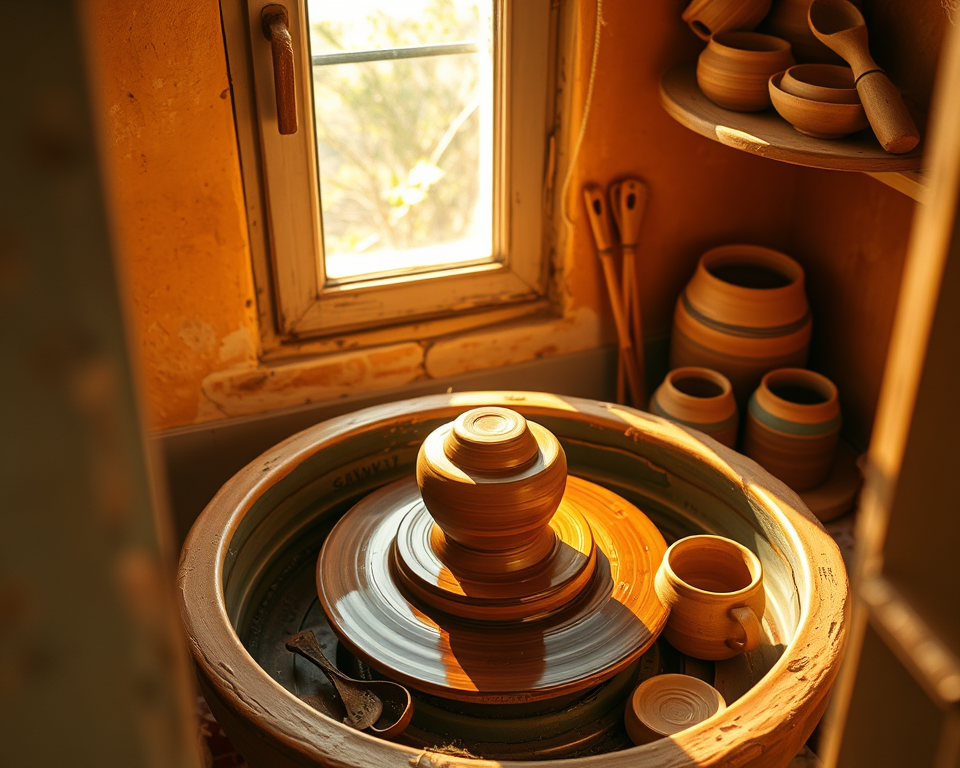
You might be wondering if it’s possible to enjoy the art of pottery within the cozy confines of your apartment. I know that cramped space can feel like a challenge, but trust me—it can also be a canvas for creativity! With the right setup, essential tools, and a sprinkle of inspiration, you’ll find that pottery is not only feasible but downright enjoyable. Let me share my journey with you and sprinkle in some insights that’ll have you molding clay in no time!
Table of Contents
- 1 Key Takeaways
- 2 Setting Up Your Pottery Space
- 3 Managing Noise, Smell, and Mess
- 4 Pottery Projects for Limited Spaces
- 5 Community Resources and Classes
- 6 Sustainable Practices in Apartment Pottery
- 7 Frequently Asked Questions
- 7.1 What types of pottery projects are best for small apartments?
- 7.2 How can I maximize my small pottery space effectively?
- 7.3 What are the best practices to maintain air quality while working with pottery?
- 7.4 Can I use regular kitchen tools for pottery, or do I need specific pottery tools?
- 7.5 How do I safely dispose of or recycle unused clay or pottery materials?
- 7.6 What should I look for in eco-friendly pottery supplies?
- 7.7 Are there online resources for learning pottery techniques if I can’t attend local classes?
- 7.8 How do I reduce noise while working on pottery in an apartment setting?
- 7.9 Is there a way to organize my pottery materials efficiently in a small space?
- 7.10 What community resources are available for beginner potters in urban areas?
Key Takeaways
- Optimize Your Space: Designate a specific area in your apartment where pottery can thrive; it doesn’t have to be huge!
- Choose Smart Tools: Invest in essential tools like the Sculpey Premo Clay (around $10 for a 2 oz package) for easy handling without the need for a kiln!
- Create with Care: Use low-odor materials and manage noise to keep things cozy—don’t scare the neighbors away!
- Get Involved: Tap into local pottery communities for classes and sharing ideas; it’s a great way to learn and meet fellow clay enthusiasts.
- Sustainable Choices: Look for eco-friendly supplies; it’s rewarding to create art while being kind to our planet.
Setting Up Your Pottery Space
Finding the right space in your apartment is crucial. Believe me, trying to work in a cluttered area is a recipe for disaster. Whether you’ve got a spare corner or a whole room to play with, let’s make it work.
Choosing the Right Space in Your Apartment
Start by identifying a functional pottery area. I’ve worked in a variety of small spaces, and I can assure you that even the tiniest corners can become your creative zone. Look for spots with good natural light—your pottery deserves a spotlight!
“Pottery is about more than just the clay; it’s about the environment you create around it.”
Interestingly, maximizing that space doesn’t just mean cleaning it up. Think creatively—furniture that doubles as storage can save you from clutter. I find that having a sturdy table for kneading clay and a shelf for materials helps keep things organized and accessible.
Essential Tools and Materials for Apartment Pottery
So, what do you need to get started? The essential tools might surprise you! You don’t need to break the bank on fancy equipment either. Here’s the scoop on building your pottery arsenal on a budget.
Basic Essentials
- Clay: Look no further than Sculpey Premo, a fantastic polymer clay that’s versatile and available in various colors. It’s non-toxic and perfect for beginners—$10 for a 2 oz package feels like a steal!
- Tools: Grab yourself a basic pottery kit from Amazon. Kits like the Craft Smart 8-Piece Pottery Tool Set (around $12) come with all the essentials you need for shaping, carving, and modeling.
- Work Surface: An inexpensive cutting mat is a game-changer—it protects your surfaces while providing a nice, clean area to work on.
| Item | Estimated Cost | Purpose |
|---|---|---|
| Sculpey Premo Clay | $10 | Versatile modeling clay |
| Craft Smart Tool Set | $12 | Essential pottery tools |
| Cutting Mat | $10 | Protective work surface |
Remember, you can always upgrade as you grow in your crafting journey.
Managing Noise, Smell, and Mess
Crafting can sometimes be noisy and messy, and we all know that apartments aren’t exactly synonymous with quietude! The good news? There are ways to keep everything under control.
Strategies for Noise Reduction
Let’s face it—some pottery tools can sound like a rock concert. To keep things serene while you create, consider quieter alternatives.
Look for tools marked as “quieter” or even invest in a portable pottery wheel like the Brent Mini Wheel ($195). It operates with less noise than traditional models, allowing you to practice techniques without disturbing your neighbors or your own peace of mind.
Additional Tips:
- Use felt pads under heavy equipment to absorb sound.
- Craft during hours when your neighbors are least likely to be bothered, like during the day if they’re at work.
Dealing with Odor and Dust
Clay can have a bit of a smell, especially when you’re mixing or when certain materials are involved.
For me, choosing low-odor clay options is essential. Brands like Crayola Air-Dry Clay ($9 for 2 lbs) don’t stink up your place and are perfect for quick projects. Plus, they air-dry, so you won’t need a kiln!
“Managing smell and mess is part of the creative process. With the right choices, you can keep your space inviting!”
Regarding dust control, always use a damp sponge or cloth to keep surfaces clean while crafting. Your apartment will thank you!
Pottery Projects for Limited Spaces
So, what can you create in your small apartment? You’re not limited to tiny trinkets—there’re plenty of fun and practical pottery projects for any space.
Selecting Appropriate Pottery Projects
Let’s kick it off with some starter project ideas! If you’re a beginner, don’t overthink it. Simple clay creations can bring you joy without overwhelming you.
- Mini Planters: Believe it or not, those little pots are perfect for succulents or herbs and take up minimal space.
- Coasters: These practical pieces are a great way to practice your carving techniques and make useful gifts.
- Mugs: If you’re feeling a little adventurous, a small mug can be a worthwhile project that’s functional too!
Tips for Successful Small-Scale Pottery
I’ve learned that working on compact projects can actually boost creativity. Take your time, enjoy the process, and remember that small doesn’t mean easy! Keep these pointers in mind:
- Break down larger projects into smaller steps. It’ll make everything feel more manageable.
- Create a designated “drying zone” for your pieces, even if it’s just a section of your desk.
- Stay organized—keep your tools and materials grouped together to save time and frustration.
“Crafting small can lead to big creative breakthroughs!”
With practice, you’ll find a rhythm and could carefully create small pottery masterpieces.
Community Resources and Classes
Engaging with other pottery enthusiasts is a fantastic way to hone your skills and get inspired. Local resources can open doors to opportunities you didn’t even know existed.
Finding the Right Classes
Look for beginner pottery classes or workshops near you. Websites like Meetup or local Facebook groups are goldmines for finding pottery workshop postings. Classes are invaluable, allowing you to connect with fellow newbies and learn from experienced potters. Not to mention, it’s a great way to escape your apartment for a while!
Local Resource Suggestions:
– Check local community centers and art studios—many offer pottery classes at reasonable prices.
– Explore nearby craft stores for workshops—Michael’s often hosts basic pottery sessions!
Leveraging Online Resources
But hey, sometimes you just can’t fit a class into your busy schedule. This is where online resources come in! There are tons of YouTube channels with excellent video tutorials for every beginner technique. Websites like Skillshare also offer online pottery courses, where you can learn at your own pace[^1^.
Plus, forums and communities like Reddit’s r/Pottery are excellent places to ask questions, share your creations, and find answers from more experienced potters.
Sustainable Practices in Apartment Pottery
If you’re anything like me, the environment is important. Mud and clay are great, but let’s consider how we can craft while being kind to Mother Earth.
Selecting Eco-Friendly Materials
Here’s the inside scoop: plenty of eco-friendly options are out there! Choose non-toxic clay, and look for brands that prioritize sustainable practices.
For example, the Eco-Flex Clay by Amaco ($18 for 5 lbs) is an excellent choice that’s safe and made without harmful chemicals.
Implementing Sustainable Pottery Practices
You can integrate some green practices into your pottery routine. Use leftover bits of clay for embellishments or small art pieces.
It might sound simple, but recycling clay can minimize waste—your creative side will thank you! You can also investigate digital pottery tools to design your projects before getting your hands dirty.
By embracing sustainability, not only are you making art, but you’re also contributing to a healthier planet.
By pouring love and care into your apartment pottery journey, you’ll find it to be a rewarding and enriching hobby. Remember, it’s all about finding your groove, making clever adaptations, and connecting with the community around you. Get those hands dirty and embrace the beauty of clay!
Frequently Asked Questions
What types of pottery projects are best for small apartments?
Small apartments benefit from compact pottery projects such as mini pots, small jewelry dishes, or decorative tiles. These projects require minimal materials and can be completed with limited workspace, making them perfect for beginners or those with restricted space.
How can I maximize my small pottery space effectively?
To maximize your small pottery space, consider vertical storage solutions, such as shelves or pegboards, to organize tools. Create designated zones for different tasks (e.g., molding, drying, and finishing) to maintain order and efficiency in your setup.
What are the best practices to maintain air quality while working with pottery?
To maintain air quality, use low-odor clays and ensure proper ventilation in your workspace. Consider using air purifiers or plants to help filter dust and odors. Regularly clean your area to minimize the accumulation of dust and allergens.
Can I use regular kitchen tools for pottery, or do I need specific pottery tools?
While some common kitchen tools (like rolling pins and knives) can be adapted for pottery use, investing in basic pottery tools such as rib tools, needle tools, and clay cutters will enhance your experience and improve your results. These tools are designed for specific tasks in ceramics.
How do I safely dispose of or recycle unused clay or pottery materials?
Unused clay can often be reused. If not, dry it out completely and dispose of it in your trash. For glazing and other materials, check for recycling options at local art studios or community centers that accept ceramics waste.
What should I look for in eco-friendly pottery supplies?
When searching for eco-friendly pottery supplies, look for non-toxic clay, water-based glazes, and biodegradable materials. Research brands that prioritize sustainability and transparency about their materials and manufacturing processes.
Are there online resources for learning pottery techniques if I can’t attend local classes?
Yes! Many websites offer free or paid online pottery tutorials and courses. Platforms like YouTube, Skillshare, and specialized pottery sites provide valuable instructional videos that can help you learn at your own pace.
How do I reduce noise while working on pottery in an apartment setting?
To reduce noise, consider using quieter tools, such as hand tools instead of electric ones. Soundproof your workspace with rugs or acoustic panels and designate specific work hours to minimize disturbance to neighbors.
Is there a way to organize my pottery materials efficiently in a small space?
Yes! Use clear bins or drawer organizers to categorize supplies by type (tools, glazes, clay) and label them for easy access. Store heavier items on lower shelves to prevent clutter and ensure your workspace remains tidy and functional.
What community resources are available for beginner potters in urban areas?
Local community centers, art studios, and universities often host pottery classes and workshops. Additionally, look for pottery co-ops and clubs where you can connect with fellow enthusiasts, share resources, and gain valuable mentorship.
